Why Everyone Need These Guns if WW3 Started Tomorrow!
8 Survival Guns Every American Should OWN!
When the supply chains freeze and the shelves go empty, the gun safe becomes the most honest inventory in your house. Not the one with the flashiest spec sheet — the one that runs, every time, with ammo you can actually find.
This list isn’t built on hype or brand loyalty. It’s built on reliability, proven design, civilian familiarity, parts availability, and decades of real-world trust. Eight platforms made the cut. The number one pick might surprise you — but by the end, you’ll see exactly why it earned the top spot.
8. Ruger 10/22 — The Underestimated Foundation
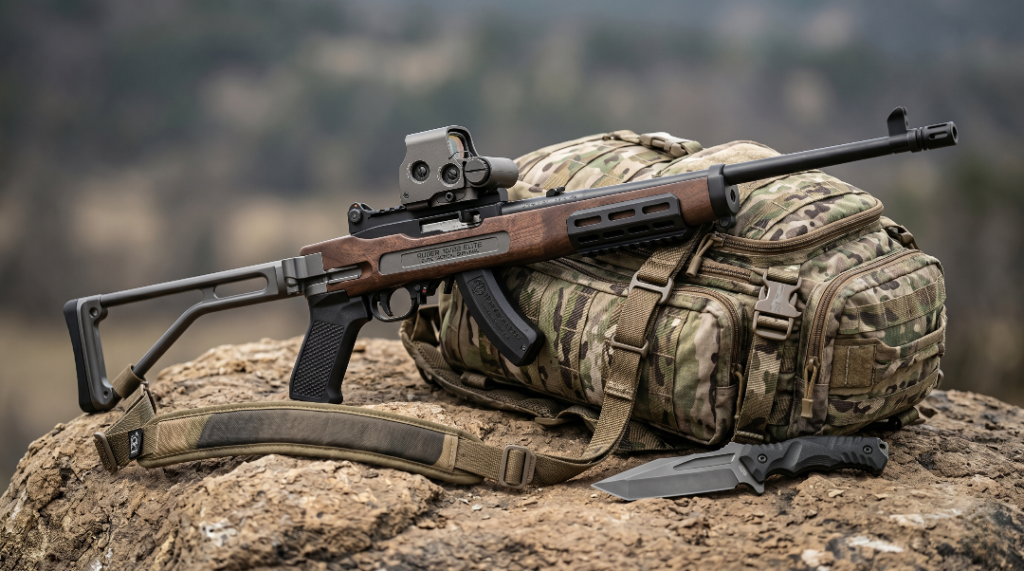
The Ruger 10/22 is a rimfire chambered in .22 LR — one of the most available, affordable, and widely stocked rounds in America. In a long-term emergency, ammo availability isn’t a small detail. It’s everything.
On paper, that sounds like a disqualifier next to centerfire rifles. But the 10/22 has been in continuous production since 1964 — over sixty years. That kind of staying power isn’t luck. It’s the result of an honest, reliable, accessible design.
The action is famously smooth. The magazine system is widely supported. The aftermarket is so deep that enthusiasts have built entire custom rifles around the 10/22 platform without ever touching a factory part.
What the 10/22 brings to a survival lineup isn’t firepower — it’s training value. It builds platform familiarity and mechanical confidence without the fatigue or logistics of centerfire calibers. Every other gun on this list benefits from the fundamentals a 10/22 helps you build.
7. Springfield Armory Kuna 9mm — The Roller-Delayed Wildcard
New 9mm platforms always face the same question: is this reliable, or just launch-day hype?
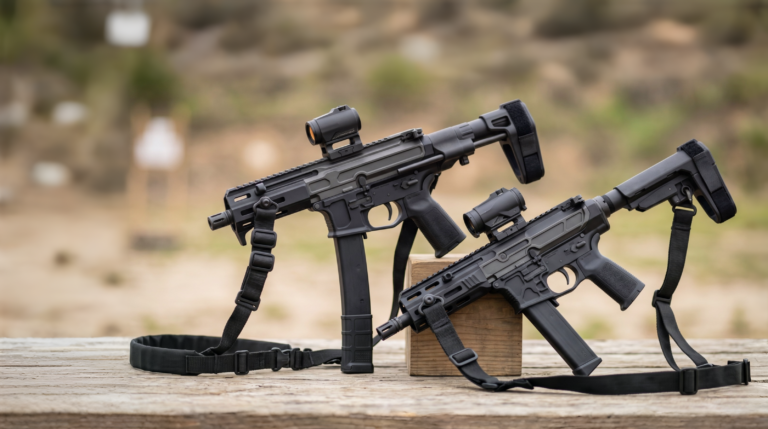
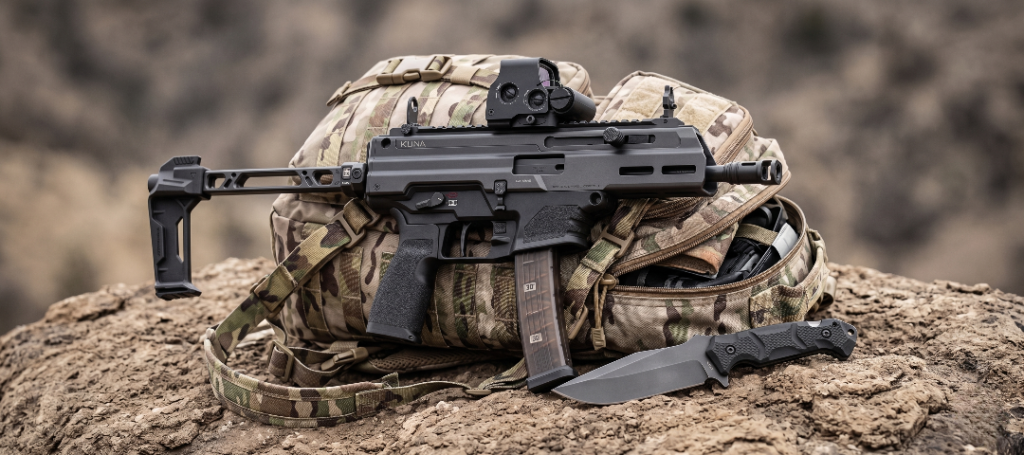
The Springfield Armory Kuna isn’t trying to be another polymer duty pistol. It’s a compact 9mm PDW-style platform built around a roller-delayed operating system — a design choice that changes how recoil feels, how fast the gun settles, and how controllable it becomes under rapid fire.
The Kuna features a monolithic aluminum upper, polymer lower, 6-inch threaded barrel, hybrid flip-up sights, and 30-round translucent magazines with metal feed lips. That’s closer to a compact subgun than a traditional handgun.
The roller-delay system flattens recoil and keeps the gun settled for faster follow-up shots, while the ambidextrous controls and compact footprint make it feel modern without becoming a gimmick. Springfield brought a serious, feature-rich 9mm into the PDW conversation from day one — and that earns it a spot here.
6. Beretta 1301 Tactical Mod 2 — The Shotgun That Breaks the “Slow” Stereotype
Most people hear “shotgun” and think slow, heavy, and punishing. The Beretta 1301 Tactical Mod 2 exists to challenge that.
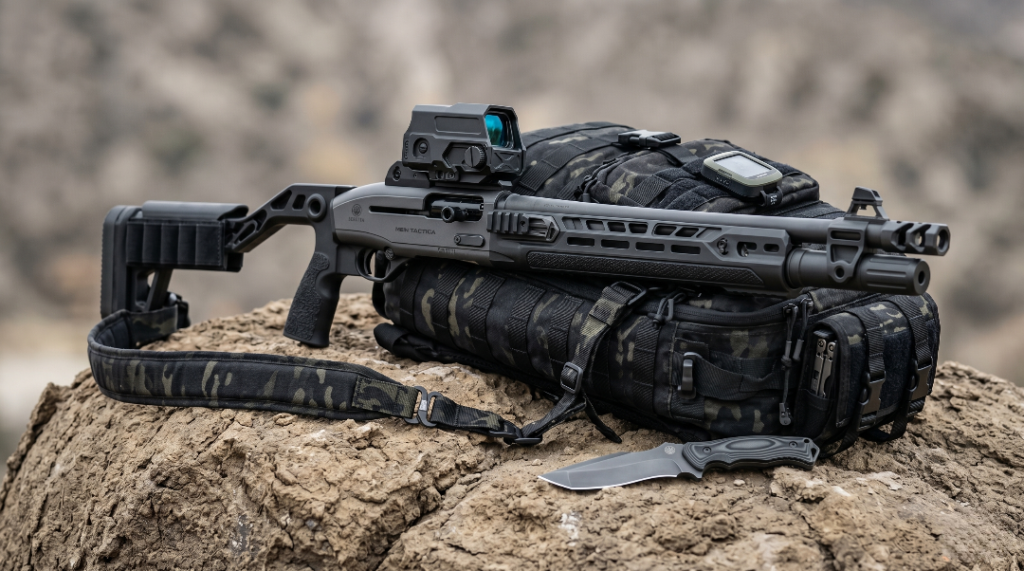
This 12-gauge, gas-operated semi-auto runs on Beretta’s Blink gas system, built for extremely fast cycling and smoother recoil control. When a shotgun is hard to run or punishing to recover from, raw power becomes a liability — not an asset.
The 1301 keeps the shotgun’s biggest advantage — devastating close-range stopping power — but makes it faster and easier to control. The 18.5-inch barrel keeps it compact for tight spaces: vehicles, hallways, cabins, defensive positions. Enlarged controls, ghost-ring sights, a Picatinny rail, and upgraded Mod 2 furniture give it the feel of a serious fighting tool, not a repurposed hunting gun.
In a breakdown scenario, a shotgun isn’t just about firepower — it’s about stopping power, ammo flexibility, and reliability up close. The 1301 delivers all three without feeling outdated.
5. Mossberg 590A1 — Built for Abuse, Not Comfort
The Mossberg 590A1 doesn’t try to impress anyone — and that’s the point.
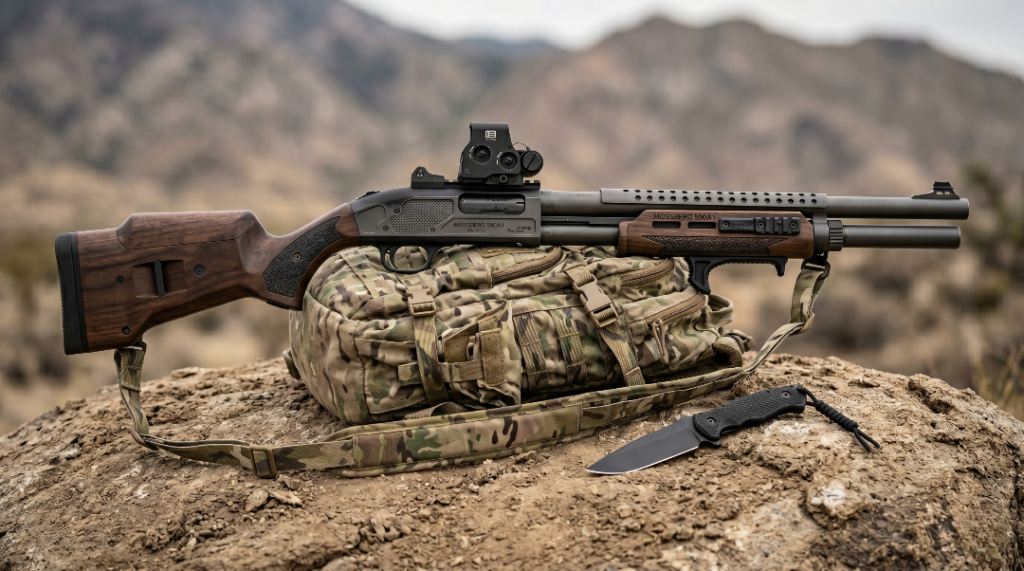
This is a 12-gauge pump-action shotgun. No gas system, no cycling debate, no delicate parts that need babying in mud, dust, or cold. It’s built to MIL-SPEC 3443G, a standard centered on abuse, not comfort. The heavy-walled barrel, metal trigger guard, metal safety, Parkerized finish, and clean-out magazine tube all point in one direction: built to be used hard and kept running.
In a long-term breakdown, simplicity is power. A pump shotgun doesn’t care about light loads, mixed shells, or a dirty action. If you run it right, it runs — period.
The 590A1 isn’t the fastest or flashiest shotgun here, but when everything’s dirty and falling apart, it’s the gun people trust because it was built for hard use long before “hard use” became a marketing buzzword.
4. Springfield Armory M1A — Reach, Power, and Pedigree
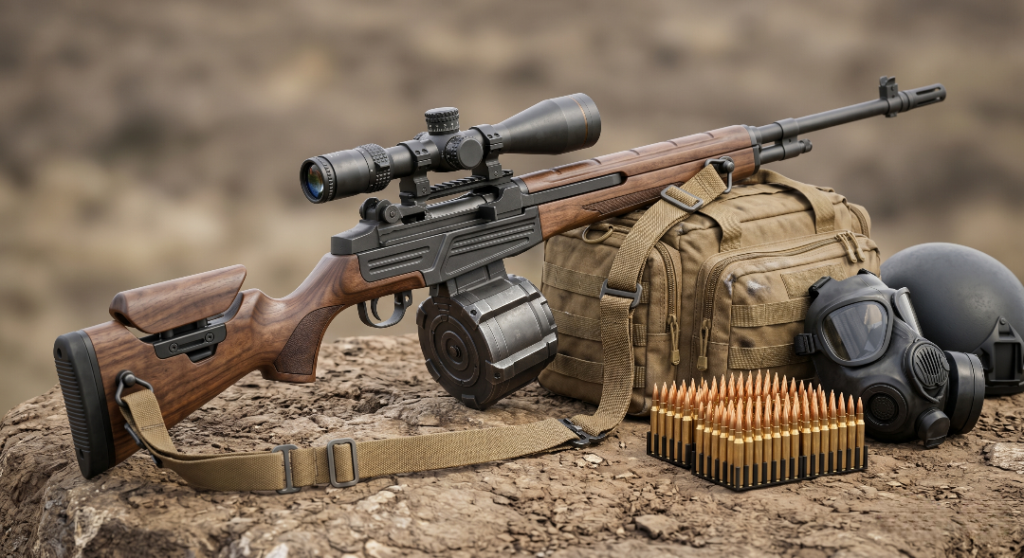
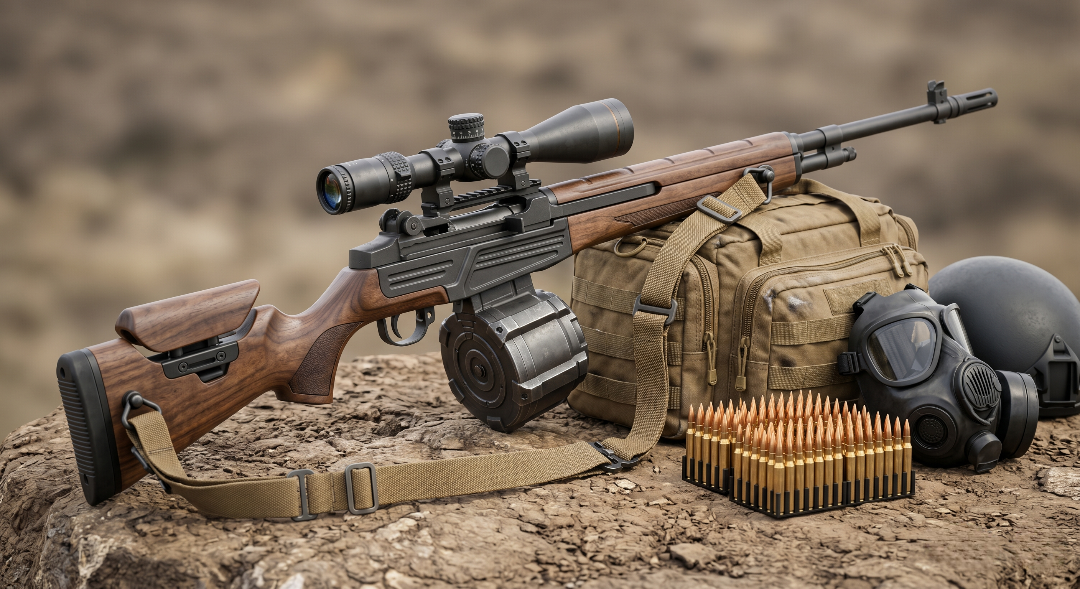
Some rifles carry history whether they want to or not. The Springfield Armory M1A is the civilian semi-auto descendant of the M14, sharing DNA with the legendary M1 Garand. It’s most commonly chambered in .308 Winchester / 7.62x51mm NATO — a full-power round that puts it in a different category than the lighter intermediate-caliber rifles most people default to.
The M1A isn’t the lightest, shortest, or most compact option here. What it offers instead is reach, power, and authority at distance. When open ground, rural terrain, barriers, or larger game come into play, a full-power .308 makes a serious argument for itself.
The gas-operated action with a rotating bolt feeds from detachable box magazines, backed by decades of support and a massive enthusiast community. The M1A didn’t earn its spot through innovation — it earned it through permanence.
3. Glock 19 Gen5 — The Pistol Beyond Argument
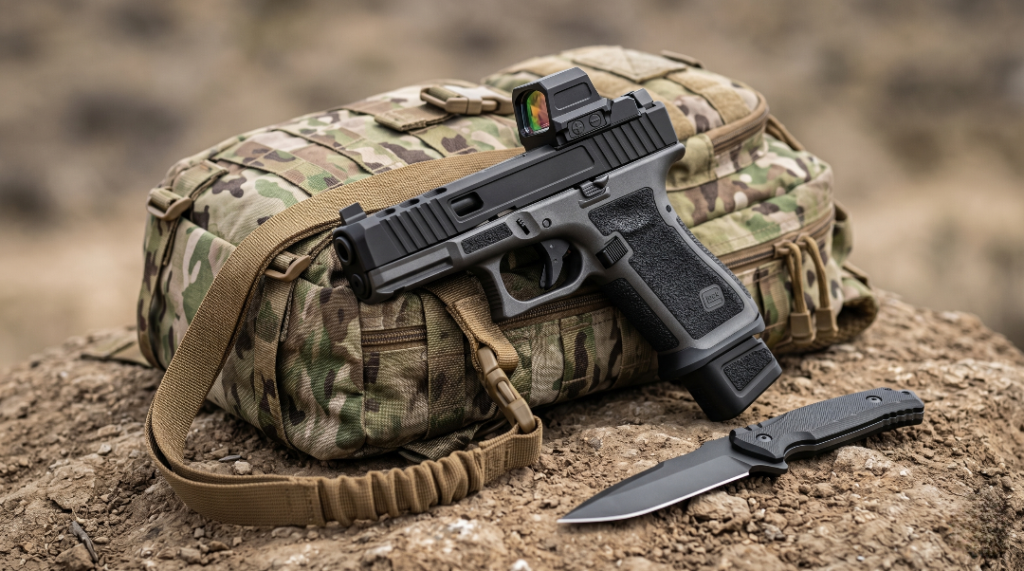
There are pistols people debate, and then there’s the Glock 19.
The Gen5 represents a configuration that an enormous percentage of American shooters already understand instinctively: 9mm chambering, a compact-but-not-subcompact frame, 15-round standard capacity, and striker-fired simplicity.
The Gen5 refinements aren’t cosmetic — they’re the result of decades of user feedback acted on directly. The flared magwell, ambidextrous slide stop, removal of the divisive finger grooves, and the durability-focused nDLC finish all reflect that.
What truly sets the Glock 19 apart isn’t the spec sheet — it’s the ecosystem. Law enforcement adoption, military contracts, institutional training programs built around this exact platform, and aftermarket support that’s arguably the most extensive in the pistol world. You can find a Glock 19 magazine in towns without a single gun store. That’s thirty-plus years of platform ubiquity at work.
2. Ruger Mini-14 Tactical — The Practical Rifle That Doesn’t Scream “Tactical”
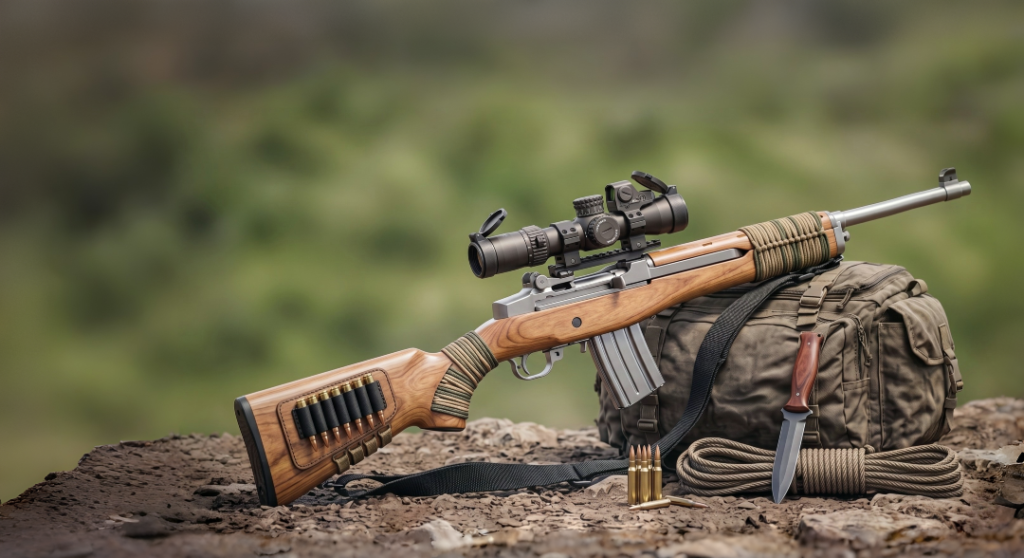
The Mini-14 has flown under the radar for decades — and in a survival context, that might be exactly why it matters.
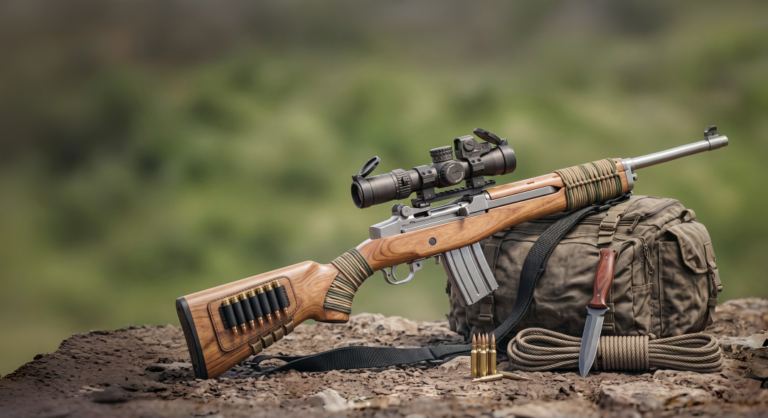
Ruger built it around a simple, rugged, Garand-style action with a rotating bolt, fixed-piston gas system, and a self-cleaning moving gas cylinder. It takes the spirit of the M14 and shrinks it into a lighter 5.56 NATO rifle that feels more like a ranch gun than a tactical statement piece.
That’s the point. The Mini-14 Tactical gives you common 5.56 ammunition, semi-auto speed, and real rifle capability — without the unmistakable AR-15 profile. In restrictive states, rural communities, or situations where blending in matters, that lower-profile look is a real advantage.
The Tactical model adds a handy barrel length, adjustable sights, a flash suppressor, and rugged construction, with some versions featuring a stainless side-folding stock for a compact, weather-resistant package. It was never built to win a parts-catalog war — it was built to be carried, used, and trusted.
1. Smith & Wesson M&P15 Sport III — The Most Practical Rifle for Uncertain Times
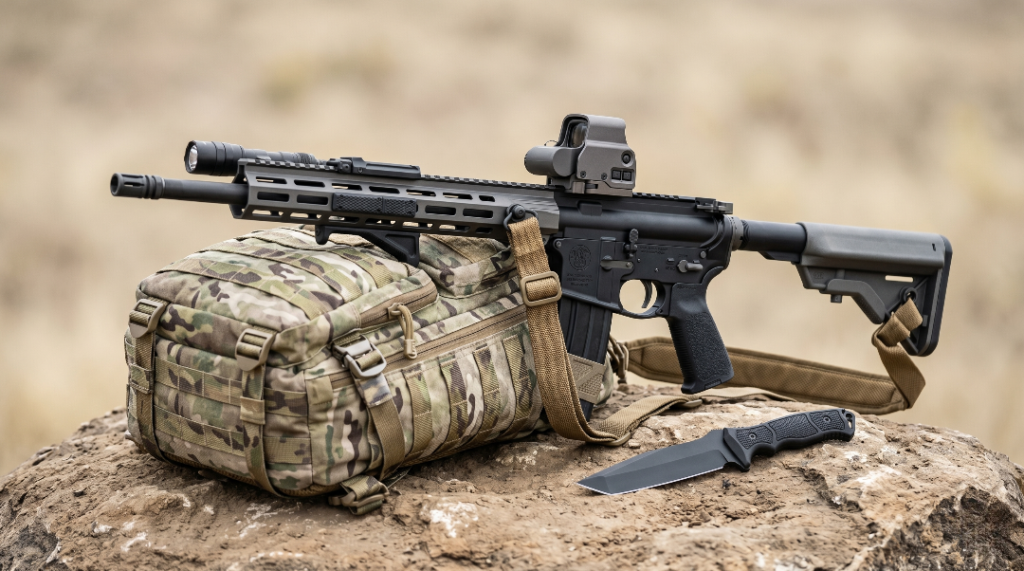
If you saw this coming, you understood exactly what this list was measuring.
The Smith & Wesson M&P15 Sport III tops this list not because it’s exotic — because in a survival situation, exotic is usually the wrong answer. This is an AR-15 pattern rifle chambered in 5.56 NATO / .223 Remington, and that single fact matters more than almost anything else on the spec sheet.
The ammo is common. The magazines are common. The parts are common. The controls are familiar to millions of shooters, and the knowledge base around this platform is everywhere.
The Sport III brings real upgrades to that foundation: a 16-inch barrel, 1:8 twist rate, flat-top upper, M-LOK handguard, BCM Mod 0 grip, and a Magpul MOE SL stock. These aren’t cosmetic add-ons — they’re practical improvements that make the rifle easier to mount, configure, and rely on.
The AR-15 platform wins here because it’s familiar, modular, lightweight, easy to maintain, and backed by one of the deepest parts and training ecosystems in American shooting. The M&P15 Sport III isn’t the only good AR — but as an accessible, full-featured entry into the most practical rifle platform for uncertain times, it earns the top spot.
Final Thoughts
At the end of the day, the guns in your safe represent a commitment — the quiet promise that if things get unpredictable, you can take care of the people you love. Hype fades. Platforms built on honest engineering, the ones you can feed and fix yourself, are what actually matter.
Every gun on this list earned its spot — but this list isn’t the final word. Which platform do you trust most? And if you disagree with the number one pick, make your case in the comments. We’re all here to learn from real-world experience.
If you found this useful, share it with someone building their own setup — and stick around, because next time we’re breaking down which debated rifle calibers actually hold up under pressure.